
Living along the South Florida coast means enjoying year-round sunshine, ocean breezes, and some of the most beautiful beaches in the country. But if you’ve spent any time in Sunny Isles, Aventura, or Hallandale Beach, you already know that the humid subtropical climate presents real challenges for your skin.
The same warm, moisture-rich air that makes this area feel like paradise can leave your complexion feeling greasy, congested, and prone to breakouts.
This guide explains how humidity impacts your skin at every level and walks through the treatment options worth considering.
Why South Florida Weather Feels Like a Battle for Your Skin
You step outside for a quick walk to the beach, and within minutes your face feels slick with oil. Your makeup slides off before you’ve even reached brunch. By mid-afternoon, your pores seem larger than they did at breakfast.
The challenge intensifies during summer months, with humidity levels regularly exceeding 80 percent. For anyone trying to maintain a polished appearance for work or social events, this climate can feel like a constant uphill battle.
Understanding what’s happening beneath the surface of your skin is the first step toward finding relief.
The Science Behind Humidity and Your Skin
Your Skin Produces More Oil Than It Needs
High humidity sends confusing signals to your skin. The air is saturated with moisture, so your skin’s natural hydration sensors register that external moisture is plentiful. In response, the sebaceous glands often ramp up oil production as a protective mechanism.
This creates a frustrating paradox, and it’s one of the main reasons controlling oily skin in South Florida feels so difficult. The more humid the environment, the oilier your skin may become.
Oil, Sweat, and Pollutants Team Up Against Your Pores
Excess sebum alone would be manageable, but it rarely stays isolated. Throughout the day, that oil mixes with sweat, environmental pollutants, sunscreen residue, and dead skin cells. This combination forms a sticky film that settles into pores and creates blockages.
Preventing breakouts in a humid climate requires more than washing your face twice a day. The buildup often goes deeper than surface-level cleansing can reach.
Bacteria Thrive in Warm, Moist Conditions
Warm, moist conditions are ideal for bacterial growth. The same humidity that makes your skin feel sticky also creates an environment where acne-causing bacteria can multiply rapidly. Many notice an uptick in blemishes during humidity season, even if their skincare routine hasn’t changed.
Professional Treatments That Go Deeper Than Your Cleanser
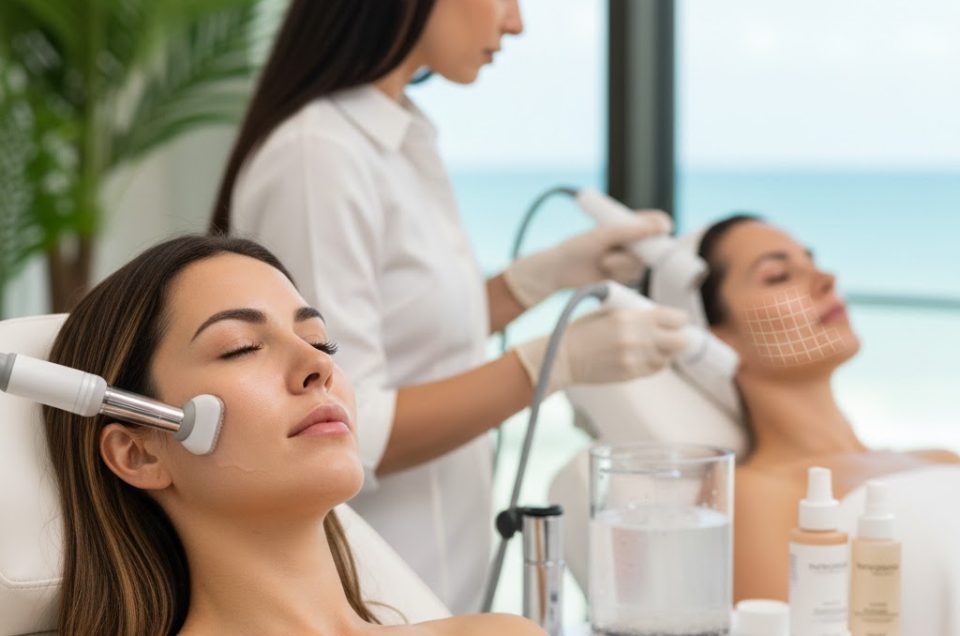
At-home products play an important role in daily maintenance, but they have limitations. Professional skin treatments designed for oily, congested skin can access deeper layers of the epidermis and address buildup that cleansers cannot reach.
If you are dealing with persistent humidity-related concerns, targeted facial treatments offer a level of cleansing and rebalancing that transforms how skin functions in this climate.
HydraFacial for Deep Pore Extraction and Hydration
For anyone searching for the best facial to combat humidity, HydraFacial consistently ranks among the top recommendations. This treatment uses patented vortex technology to simultaneously extract impurities from pores while infusing the skin with hydrating serums. The result is thorough extraction without the dryness or irritation that harsh treatments can cause.
Pores appear smaller after treatment, skin looks clearer, and the hydration component helps regulate oil production in the days following your session. It’s a strong option for anyone dealing with clogged pores and looking for something more effective than their daily routine.
Morpheus8 for Texture and Long-Term Skin Resilience
Humidity doesn’t only affect oil levels. Over time, constant environmental stress can impact skin texture, firmness, and overall resilience. Morpheus8 addresses these concerns by combining microneedling with radiofrequency energy to remodel the skin from within. The treatment stimulates collagen production and tightens the underlying tissue.
This option works well for those who want to improve their skin’s structural integrity while also addressing surface concerns. Stronger, healthier skin is better equipped to handle daily exposure to South Florida’s demanding climate.
Rejuran for Barrier Repair and Cellular Healing
Environmental stressors can compromise the skin barrier over time, making it harder for your skin to retain moisture and defend against pollutants. Rejuran, often called salmon DNA therapy, focuses on deep cellular repair and regeneration. The polynucleotides in this treatment help heal damaged tissue and restore the skin’s natural protective functions.
This option is particularly valuable for those whose skin barrier has been weakened by years of sun and humidity exposure. A stronger barrier means better overall skin health and improved response to other treatments.
Building a Routine That Works With Your Climate
Professional treatments work best with support from a thoughtful daily routine. In humid environments, lightweight, non-comedogenic products perform better than heavy creams. Look for water-based moisturizers and gel sunscreens that absorb without leaving residue. Oil-free formulations help prevent additional congestion between treatment sessions.
Consistency matters more than complexity. A simple routine that you follow every day will serve your skin better than an elaborate regimen you abandon after a week.
Finding the Right Approach for Your Skin
Every person’s skin responds differently to the South Florida climate, and what works for one person may not work for another. The key is understanding your own skin’s patterns and finding treatments that address your specific concerns.
If you’re curious about which options might be right for you, a consultation with a skincare professional can help you sort through the possibilities and build a plan tailored to your needs and lifestyle.
-

Solea Medical Spa and Beauty Lounge your first and final destination for all your beauty and medical needs.
info@soleabeautylounge.com